
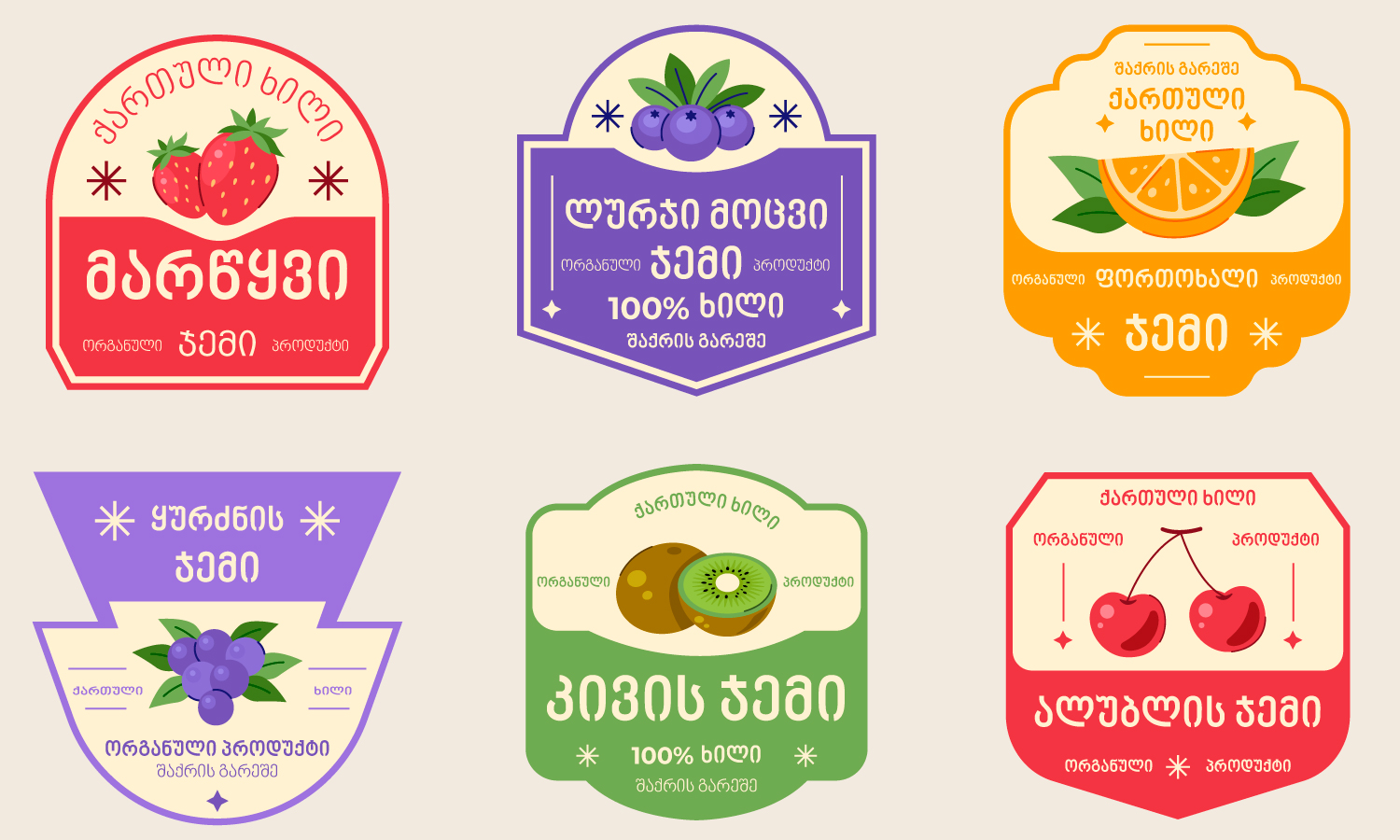
Food Labeling in Georgia: Understanding Official, Common, and Descriptive Food Names
Accurate and transparent food labeling is a key component of food safety and consumer protection. In Georgia, the rules for naming and labeling food products are clearly defined in Resolution No. 301 of the Georgian Government – On the Provision of Food Information to Consumers. These regulations ensure that consumers receive clear, honest, and consistent information when purchasing food products, whether from retail outlets or public catering facilities.
To comply with this legislation, food can be marketed and sold to the final consumer using one of the following types of designations:
Official Name of the Food
The official name refers to the name of the food product as defined by Georgian national legislation. This is the legally recognized designation under which a product is presented to the market. It may relate to traditional Georgian foods, products with geographical indications, or those regulated by specific product standards.
Examples include:
- Kvevri wine – a traditional Georgian wine fermented in clay vessels
- Fortified wine – wine that includes additional alcohol for preservation or flavor
Using the official name ensures that the product is aligned with its legally recognized identity and helps protect traditional Georgian food products from imitation.
Common Name of the Food
The common name is a term widely understood by the average consumer, referring to a specific type of food without needing further clarification. It does not necessarily require a legal definition but is recognizable through general usage and market familiarity.
Examples include:
- Pasta
- Caviar
- Bread
- Yogurt
Using a common name is often sufficient for products where the nature of the food is self-evident and well known among consumers.
Descriptive Name of the Food
When a food product does not have an official or common name – or when further clarification is needed to distinguish it from similar items – a descriptive name must be used. This name should clearly describe the nature, composition, or characteristics of the product so that the end consumer can understand what they are purchasing.
Examples include:
- Pizza with mushrooms
- Pizza with vegetables
- Oven-baked chicken with herbs
- Fruit yogurt with peach pieces
Descriptive names are especially useful for combination foods, ready meals, or customized products, where clarity and transparency are essential for informed purchasing decisions.
Prohibited Naming Practices Under Georgian Law
It is essential to understand that under Resolution No. 301, the name of a food product must not mislead the consumer. Specifically:
- The food name cannot be substituted by a trademark, brand name, or invented name that does not clearly describe the product.
- Using protected intellectual property or geographical indications as a food name without authorization is strictly prohibited.
- Imaginary or misleading names that confuse the consumer about the true nature, composition, or origin of the food are not allowed.
Such practices may lead to regulatory penalties, product recalls, or reputational damage for businesses that fail to comply.
The Role of Certification in Food Labeling Compliance
To ensure compliance with food labeling regulations in Georgia, food producers, importers, and retailers are strongly advised to work with a recognized certification body. Certification organizations provide support in:
- Verifying that food names meet legal requirements under Resolution No. 301
- Ensuring accurate and compliant food labeling for local and export markets
- Conducting label reviews and documentation audits
- Training manufacturers on food information standards
By obtaining certification and working with a qualified partner, companies can confidently navigate Georgian labeling regulations, reduce the risk of non-compliance, and improve consumer trust and market credibility.
Conclusion
Understanding and properly applying official, common, and descriptive names for food is crucial for anyone involved in the food industry in Georgia. These naming conventions help maintain a transparent marketplace, uphold traditional food standards, and protect consumers from deceptive practices.
If you are a food producer, importer, or distributor and need assistance with food labeling compliance in Georgia, the Georgian Certification Organization is here to help. Our team of experts can guide you through the certification process and ensure your food labels meet all legal requirements.